When the whales are in
Juneau's whale tours follow the cruise ships, running from about May into September. Humpbacks feed in the channels for most of that stretch, so the month you pick changes the weather and the crowds more than your odds. The notes below walk through the season, along with the wildlife that comes and goes around the whales.
A season shaped by ships and whales
Whale tours from Juneau run roughly from May to September. Cruise ships call from about late April to October, and most operators schedule their boats around them, so the shoulder weeks at either end have few departures. Independent travelers who arrive outside the cruise months will struggle to find a scheduled trip at all.
Humpback whales come north in spring to feed on herring and krill along with small fish. Many stay into the fall before heading back to Hawaii for the winter. A few seem to linger around Southeast Alaska through the cold months, though nobody runs tours for them. One listing gives the clearest clue about the peak. Juneau Tours & Whale Watch guarantees sightings only from May 15 to September 15, and a company putting its money on those dates tells you when it trusts the whales to be there. Even then, no trip can promise a whale, and the species you might meet vary from day to day.
Month by month
April and October
The edges of the cruise calendar. A few ships arrive late in April and the last leave in October, but most whale tours either have not started or have wound down. October is among the wettest months of the year. Plan around May to September unless your ship calls early or late, and ask the operator whether boats are running.
May
Humpbacks return through the spring, and by May the feeding grounds are filling. Days are long and cool, and the ships have started calling. The Juneau Tours & Whale Watch guarantee kicks in on May 15, which suggests the first weeks of the month can be patchier.
June
Long light defines June, with about 18 hours of daylight around the solstice. The cruise traffic builds and the whales are settled into feeding. Rain falls in every month here, but early summer tends to be among the drier spells.
July
The busiest month on the docks. July is usually the warmest month, with afternoons around 64 °F (18 °C) in town and a sharper chill on the water. Salmon start running in the streams, and later in the month black bears may come to Steep Creek near Mendenhall Glacier to fish.
August
Whales are still feeding, salmon are in the creeks, and the bears are often active along the boardwalk at the glacier, though they keep their own schedule. Rain becomes more frequent as the month goes on.
September
Fewer ships and fewer people at the rail. Many humpbacks are still around, yet the guarantee mentioned above ends on September 15, and September is one of the wettest months. A late-season trip can be quiet and rewarding if you dress for the rain.
Weather and daylight
Juneau is one of the rainiest state capitals in the US. Tours run rain or shine. A dry day is a bonus whatever the month. On the water the wind makes it feel colder than the town, so pack a waterproof shell and a warm layer even in July, as dressing for rain on the water explains.
Daylight never limits a summer tour. With 18 hours of it in late June and plenty still in September, the only clock that matters for most visitors is the ship's. Low cloud can hide the mountains and the glacier, which affects the scenery far more than the whales.
What else turns up, and when
Steller sea lions haul out on Benjamin Island and lounge on channel buoys through the summer. Harbor seals and bald eagles turn up on many trips. The salmon runs of July and August bring black bears down to the streams, so a glacier combo in those weeks has a fair chance of a bear from the Steep Creek boardwalk, with no promise attached. Orcas pass through in any month, and several reviewers mention pods, but nobody can predict them.
Longer on the water in any month
Harv & Marv's spends three hours on the water and picks you up at your ship, from ~$159. It cannot be refunded, so book once your port day is fixed.
Morning or afternoon boat
Local wisdom holds that the water is often calmer in the morning, before the afternoon wind builds, and that helps anyone worried about motion. It is a tendency, not a rule. Humpbacks feed all day, so an afternoon departure finds them as readily as an early one. One Lighthouse reviewer mentions a start of 8:20 am, while Harv & Marv's sends boats nearly every half hour, which gives you plenty of choice.
For most cruise passengers the ship decides. Pick the departure that fits your hours in port with time to spare, using our port-day guide. If you are prone to seasickness and have the choice, the earlier boat is a sensible bet, and our seasickness guide covers the rest.
Bubble-net feeding
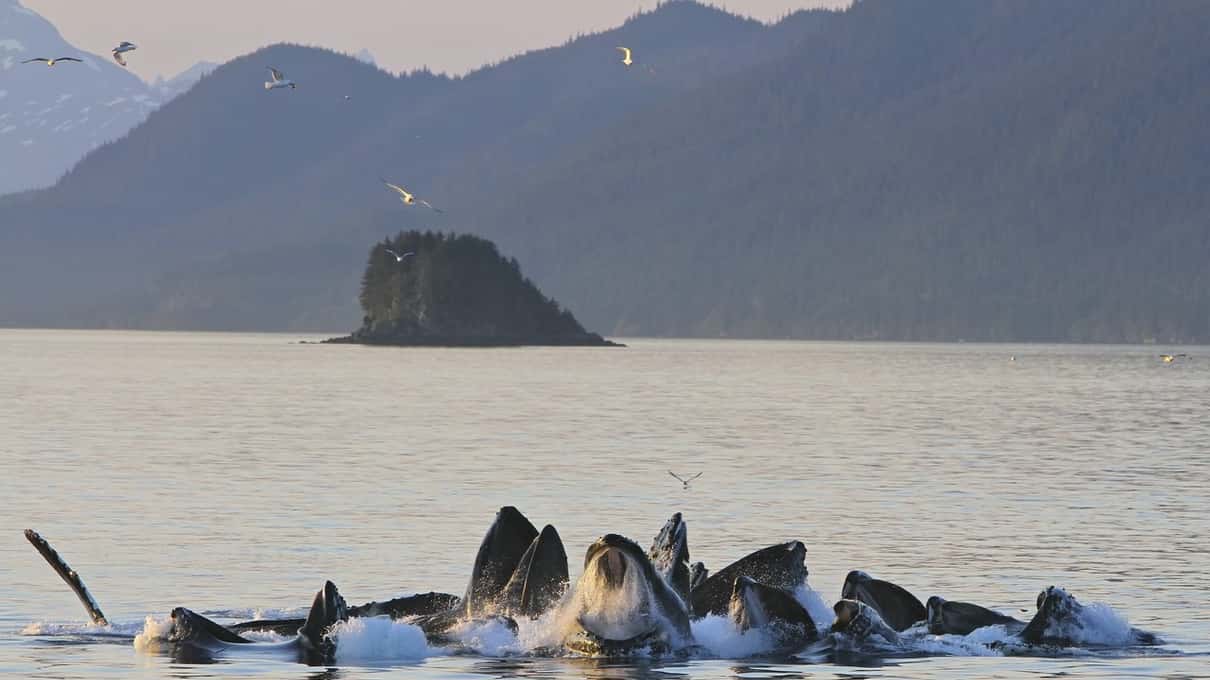
Bubble-net feeding is the sight people hope for. Several humpbacks corral herring inside a curtain of bubbles and rise through it together, jaws open. It happens in summer, when the whales are feeding hard, but seeing it on a given trip is mostly luck. The Alaska Tales glacier listing calls it rare, and a Dolphin reviewer from a cruise ship counted it as the high point of the trip. Book for the season, and treat the bubbles as a gift if they come. Photographing whales helps you be ready.